Wednesday, November 03, 2010

Thursday, October 28, 2010

On Anxiety, and Pie


Yesterday I wrote a piece about a pie.  It was a cute piece about Thanksgivings growing up and the mornings my father let me eat leftover dessert for breakfast as a little girl.  I had planned to post it here last night.  It included my favorite recipe for pumpkin pie, which I baked after running the half marathon last week, and then again the other day.  (It’s really that good.  I swear.)  Sweetened with maple syrup, the filling is creamy and light.  The crust is crunchy and thick with butter.

But then I had an anxiety attack.  Sitting at the table after dinner, my heart began to beat quickly.  There was a shooting pain in my left shoulder and arm, and I felt like I couldn’t breath.  I’ve never experienced anything like that before.  Terrified that something was terribly wrong, that my heart would explode, I waited for it to pass.  And it did.  Today I’m totally fine.  But there it is.  The anxiety is back.

Last year I was anxious all the time.  For good reason.  Matt was in Afghanistan and I was on deadline writing a book.  I was terrified that Matt would die, and that my writing was no good.  I felt positive that when Matt came home and I turned in the manuscript, I would never have anything to worry about ever again.  Ever!  Again!  My inner monologue would never raise its staccato pitch; I’d never wake up at 3 a.m. with that wild low thrum in the back of my mind.

Well, I was wrong. Duh.

I don’t know exactly what I’m anxious about right now.  I’m pretty sure that it involves finishing one project and beginning something else.  It probably has to do with living in a new city, around new people, doing new things.  There are the usual distractions: money and health insurance, therapy and exercise and love.  But when it comes down to it, I’m living in Boston with my boyfriend, who is safe and sound and whom I love.  My book is available to pre-order on amazon.com and my family is healthy and close.  I make a mean pumpkin pie.  I’m really lucky, I know.  But I’m also anxious.

And I thought I’d write about this rather than my memories of Thanksgivings past.  Not because I have a solution or even a plan for these feelings. There’s no tidy ending in sight. But after the wonderful things that have happened to me in the last two years - regaining my sense of smell, writing a book, Matt’s safe return from war - I’ve felt like my life has been neatly wrapped.  I was hurt and I recovered.  I was scared and now I'm safe.  Sometimes I feel like I have been tied so tight with a pretty pink bow that there is no more room for hurt or pain, confusion or anxiety. 

At least there’s always room for pumpkin pie.


Maple Pumpkin Pie
Adapted from Gourmet

Pastry Dough
2 cups all-purpose flour
1 ½ teaspoons salt
1 ½ sticks cold unsalted butter, cut into bits
7 – 8 tablespoons ice water

Whisk together the flour and salt in a large bowl.  Using your fingertips, quickly blend in the butter until the mixture resembles a course meal.  Add the ice water, 1 tablespoon at a time, tossing with a fork or your fingers to combine, until the mixture begins to form a dough.  Pour the dough out onto the counter, and smear is around with the heel of your hand in a few forward motions to bring it together. Form into a ball and flatten into a disk.  Wrap in plastic and chill for at least an hour.

Filling
1 cup maple syrup (Grade B suggested)
2 cups canned pumpkin
1 tablespoon cinnamon
1 ½ teaspoons ground ginger
½ teaspoon salt
1 cup heavy cream
2/3 cup whole milk
2 eggs

Remove the dough from the refrigerator.  On a lightly floured surface, roll it out with a rolling pin into a thin disk, a few inches wider than the pie plate you plan to use.  Place in the pie plate (I used a 10-inch), and then shape and crimp the overhang into an even decorative edge.  Chill in the fridge for 30 minutes.

Preheat the oven to 375 degrees Fahrenheit.

In a heavy saucepan, gently boil the maple syrup until a small amount dropped into a bowl of cold water forms a soft ball, which is around 210 degrees Fahrenheit on a candy thermometer.  Let cool slightly. 

In a bowl, whisk together pumpkin, cinnamon, ginger, salt, cream, milk, and eggs.  Then, whisk in the maple syrup.  Pour into the pie shell.  You can brush the edge of the pie dough with an egg wash here—one egg yolk whisked together with a tablespoon of water—if you want. 

Bake in the middle of the oven for one hour, or until the filling is set but the center still shakes slightly.  (The filling will continue to set as the pie cools)  Transfer to a rack to cool completely.

Wednesday, October 20, 2010

Tuesday, October 19, 2010

13.1

On Sunday I ran a half marathonIt was my first.  I learned a lot.

I learned that to get to a half marathon, one that is located in Lowell, one that begins at 8 a.m., one with a lot of traffic, you have to get up really early.  Four in the morning early.  I learned that eating one breakfast in the pitch-black pre-dawn and then another right before the 8 a.m. start is a good idea.  But I also learned that it would have been a better idea to pack something else, one of those high-sugar bars, one of those caloried Gu packets that I saw empty and littered all over the ground on the course, because halfway through my run I was hungry again.  Really hungry.  I learned that running among hundreds of people can be tricky, with all the pacing and passing and maneuvering curves.  I learned that I’m really competitive, even when I don’t mean to be.  I learned that pushing myself hard—harder than I expected—is painful.  But also awesome.  I learned that I love to run.  And that I don’t love to race.

So there you have it.  My first half marathon. I ran it in an hour and fifty-four minutes.  The little medal that they hung around my neck as soon as I finished is now hanging on my fridge.  I’m glad I did it.  I’m glad it’s done. 

When Matt and I arrived at home after the race on Sunday, I limped up the stairs, chugged some water, and I took a nap.  A long nap.  And then I got up.  And then I cooked.  My mother and her boyfriend, Charley, came over for dinner.  They brought a nice bottle of wine and a hunk of my favorite cheese.  I made Chicken Normandy, a lovely dish rich with apples, apple cider, brandy and cream.  I served it over puddles of creamy polenta and alongside green beans, which I simply sautéed in butter and seasoned with salt and pepper.  For dessert: pumpkin pie.  Whipped cream.  Sleep. 

Friday, October 15, 2010

Married

Last weekend, my friends Ben and Philissa got married.  Matt and I flew down to North Carolina for the event and stayed in a hotel near Chapel Hill, which was packed with Tarheel fans for the Saturday game.  It was warm down south—up into the 80s during the day, a sudden step back into summer.  It’s hard to imagine as I think about it now, sitting at my kitchen table in Cambridge, listening to the cold autumn wind whip past my window outside.

I had been to Chapel Hill once before.  I went with the future bride and groom for a weekend last summer, when Matt had already been deployed to Afghanistan for a few months.  It was a sweet gesture, bringing me on their trip to find a spot for the wedding.  I think they hoped to distract me from thoughts of war, to show me where Philissa grew up, to eat some good food.  I was perpetually anxious, however, and always on edge.  I’m not sure I was all that much fun.  I remember going on long runs through unfamiliar neighborhoods. The sky seemed always on the cusp of a storm.  While Matt was in Afghanistan, I had a hard time staying still.  

And despite going from venue to venue, farm to inn to antique home on that first trip, I had a hard time imaging that this wedding could actually take place.  To imagine that would mean to imagine the end of Matt’s time at war.  The months still left of his deployment seemed to span out before me forever right then.  We still had to get through the rest of the summer, and then the fall, and then the winter, and then the spring.  Hundreds of days of the constant unknown, the persistent fear, were still to come.  Imagining an end point seemed impossible. 

But then it happened.  Matt came home.  And now Ben and Philissa are married. 

The wedding was held outside at a country inn, among willowy trees and Bocce courts, a photo booth, a klezmer band and a whole of lot of family and friends.  The ceremony was beautiful and the reception fun. 

At the end of wedding, as the sun began to set and the day careened toward evening, Matt and I sat next to each other under the tent where they had served lunch.  I could hear laughter and a bit of music, the clanging of the caterers beginning to put away their wares.  The temperature was sinking fast, and the mosquitoes had just come out to bite.   The next morning we would have to wake up before 4 a.m. in order to make an early flight back to Boston.  But right there, right then, we just sat, his arm warm around my shouldersIt’s easier, now, to stay still.

Wednesday, October 13, 2010

Applesauce


I took the apples that Matt and I picked last weekend and turned them into sauce.  My mother has been making homemade applesauce every fall since I was small, and now October doesn’t feel real if it doesn’t include a steaming bowl or two. 


 My mother’s recipe is simple—more like a technique, really—and doesn’t take much time.  It requires a food mill, which can be a pain.  But I’ve lugged mine around from apartment to apartment over the last five years just for this recipe here.  Not to overdo it on apples, autumn, and their aromas, but as this sauce cooks, the house fills with the welcome scents of cinnamon and nutmeg, the ripe sugar bouquet of long-baked fruit. 


I like to eat it warm in a bowl with a dollop of vanilla yogurt on top, carefully constructing every spoonful so that it includes a small portion of each.  It’s a magical combination, really – hot and cold, creamy and smooth.  As legend has it: this was the only way that my little brother would eat fruit for years. 


Applesauce
adapted from my mother

1 bag of apples (however many, whatever kind you want) (here, I used a mixture of McIntosh and Macoun)
2 cinnamon sticks, broken in half
ground cinnamon, to taste
ground nutmeg, to taste

Chop each apple in half, and then the halves in half, and then the quarters in half at 90 degree angles.  (Otherwise known as 8 chunks.)  Place in a large pot.  Add the cinnamon sticks and then a healthy dose of ground cinnamon, as well as a few shakes of ground nutmeg.  Add a quarter cup of water to keep the apples from scorching at the start.  Cook at medium-high heat, covered, until the apples begin to bubble away.  Turn down the heat to low, and let simmer until soft.  Then, run the mixture through the food mill, discarding the stem, seed, and skin detritus that is left behind.  Shake some additional ground cinnamon on top.  Serve with vanilla yogurt. 

Thursday, October 07, 2010

Apples

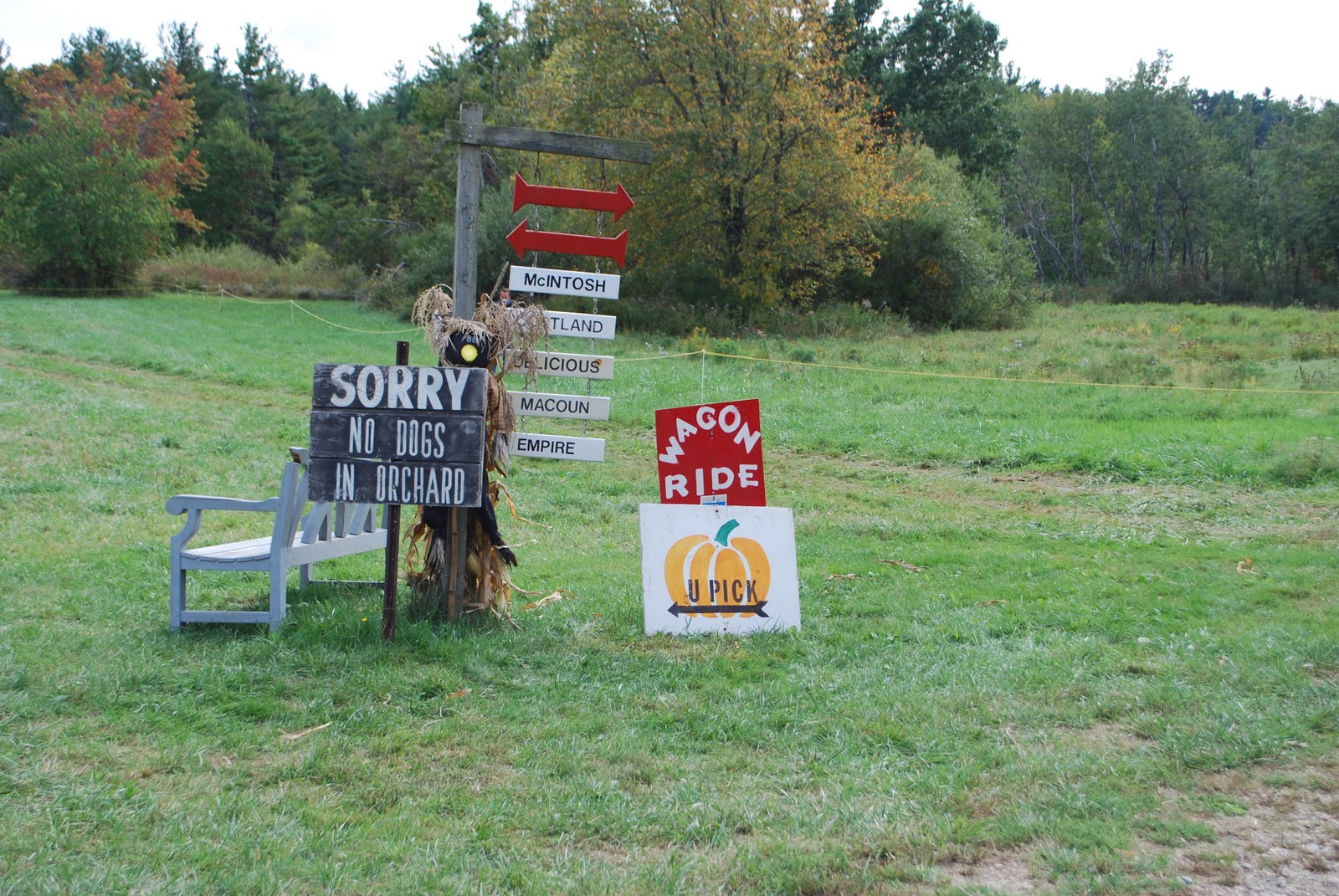
Matt and I went apple picking last Sunday afternoon.  We picked Macouns, McIntoshes and Empires at an orchard in Harvard, Massachusetts.  It was chilly out, like fall is supposed to be, and I wore a thick yellow sweater that my grandmother gave me for my birthday.  The orchard store, where a blue grass band played live on the porch, was surrounded with the bright autumn colors of pumpkins and gourds. The air smelled of dirt, grass, and the vaguely fermented twang of wrinkled apples rotting on the ground. 

I thought about the first autumn after the car accident, the one when I could no longer smell.  Then, I watched the landscape change from the window of my bedroom at my father's house, where I recovered from knee surgery.  I could see the leaves fade from green to earthy shades of red and the grass wither and die.  But the season changed without me.  I could see it, but I couldn't feel it - not without the familiar scents of apple cider, butter crusts, and decaying leaves.  Like watching a movie, I was present but not participating.  Interested but not engaged.  The world was no longer as I recalled.

These apples that Matt and I picked this year are particularly delicious.  They are fresh and crisp, practically bursting with juice.  I've been eating a lot of them raw.  But last night I cooked pork chops with onions and apples, a recipe adapted from Martha Stewart online.  The chops browned in butter and oil, the onions and apples caramelized in the leftover fat.  Tonight I'm making an apple sauce, and then an apple pie. I'm happy to again possess fall.

Wednesday, October 06, 2010

Friday, October 01, 2010

Road Food


I spent four days this past week in Maryland, skirting around the suburbs of Washington D.C.  While there, I did some research, conducted some interviews, and attended a fundraising event.  I drank a lot of coffee and ate way too many granola bars.  One night, while visiting with an old friend, I went out for Burmese food, which was good and spicy, and then out for a bunch of beers, which certainly took off the edge.  It was a good trip, a productive trip.  I’m happy I went.  But I drove there from Boston on Saturday, an epic 10-hour slog, and then back again Tuesday in the constantly spitting rain.  I never want to climb into a car again.

The drive on Saturday was especially rough.  I left early that morning feeling foggy and dazed.  The night before, Matt and I had a few friends over for dinner.  I cooked: spaghetti and meatballs, arugula salad with almonds and a balsamic vinaigrette, a tarte tatin.  A bit (well, a lot) of red wine.

The meal went well.  The meatballs were tender; the spaghetti sauce was rich and silky with a stick of butter.  I love a salad of greens and a simple vinaigrette, the crunch of toasted almond here and there. 

And the tart was good.  It wasn’t great.  It had the potential for greatness, yes.  I used a recipe from Julia Child’s Mastering the Art of French Cooking.  La Tarte des Demoiselles Tatin.  An “especially good tart if your apples are full of flavor,” Child writes.  “It is cooked in a baking dish with the pastry on top of the apples.  When done, it is reversed onto a serving dish and presents a lovely mass of caramelized apples.”

But I was stupid.  I loaded the apples that I had peeled and thinly sliced—an entire 4-pound bag from the farmer’s market—along with the melted butter, sugar, and a blanket of pastry dough made from scratch, into a baking pan with a removable bottom.  A removable bottom? It seemed like a good idea at the time. I’m not sure why.  Because when I took the tart out of the oven, all bronzed and steaming a caramel autumn scent, I saw that all of the dense buttery goodness, the kind that should have clung to lowest layer of apples, almost candy-like, had seeped out onto the baking sheet.  Gone. 

Before I served the tart, I salvaged it with a dusting of powdered sugar and a few minutes under the broiler.  With a scoop of vanilla ice cream on top, believe me, we were all okay.  But I fell asleep late that night feeling vaguely disappointed. 

Fast-forward to late on Tuesday afternoon, when, after the final hours of what felt like a never-ending drive—my legs in cramps from operating the clutch of my car in traffic, my stomach empty but for weak gas station coffee, my podcast supply severely diminished—I finally arrived home.  I parked, unloaded my bags, walked up the stairs to my apartment, and immediately opened the fridge.  There wasn’t much in there.  Nothing, really, but the remains of the tarte tatin.  It was few days old and quite stiff in its chill, but I cut a slice, sat down at my desk, and ate it with my hands like a piece of pizza. 

Now that was great.

Wednesday, September 29, 2010

Thursday, September 23, 2010

State of the Book

I am sitting at my desk right now, a thick stack of paper on my lap. I'm rereading my book, beginning to end. Again. Page by page, chapter by chapter, I've read this book more than a dozen times. A million times, it seems. I can practically recite the entire thing. The words have become so familiar I can hardly see them; the sentences contemplated so often that their meaning fades in a moment, vaporous and fast. (I don't even want to know how my poor editor feels...)

But now the book has been written and edited and rewritten and copy edited and put into its first round of galleys. Not yet bound. But close. It's exciting and totally strange to see the typeface, the copyright, the dedication already inset. I saw the cover for the first time last week. It's a painting done by a talented artist. I can really only stare at it in disbelief.

The best part, though, is its new title: Season To Taste: How I Lost My Sense of Smell and Found My Way. Also, underneath it on the jacket cover: my name. My name on a book. A real live book. Who woulda thought?

Tuesday, September 21, 2010

Flatbread, Za'atar

On Saturday night, Matt and I threw a dinner party. All of our guests were graduate students. Some were there to break the Yom Kippur fast. Others, simply to celebrate an early autumn night away from school. At one point I realized that I was the only person in the room without an incomplete problem set looming over my head. (And I will admit: this I enjoyed.)

I cooked a lot for this party, beginning early that day. There was an heirloom tomato tart with caramelized onions, olives, and capers on puff pastry with edges a crisp golden brown. Short ribs braised in red wine, served over polenta creamy with butter and cheese. An intensely chocolate tart. Whipped cream.

That morning I relished the quiet hours bent over the stove with a wooden spoon, chopping onions on the counter, melting chocolate in a deep glass bowl in order to make a glaze. It was a beautiful day, and the kitchen was full of light. I concentrated on the colors and the textures of my ingredients. The clanking sound of fork and knife, the sizzle of meat in the pan. The slow, low scent of butter, sugar, and chocolate as the tart baked in the oven. There were moments, here and there, when I was sure nothing had been so vivid as the orange of that grated carrot, the smoky smell of that rib as it seared. The thought came often and unbidden: I love to cook.


As people filtered into our apartment, which glowed in the dusky light of gloaming around 7 p.m., we began by drinking red wine and sampling homemade hummus, scooped onto strips of the flatbread covered in za’atar that I had baked that afternoon, filling the kitchen with the scent of the Mediterranean, of the Middle East.

The chatter, the laughter, the taste of cumin and chickpeas lingering on the tongue—that’s when I remembered that even more than cooking, even more than the solitude of the senses at the stove, what I really love isn’t to cook: it’s to feed. I love when friends and strangers come together around a table laden with food. There’s nothing better over which to bond. There’s nothing more like home.


Flatbread with Za’atar
Adapted from Spice, a lovely cookbook by Ana Sortun

1 package (¼ ounce) active dry yeast
¾ cup warm water (between 110 and 120 degrees Fahrenheit)
¼ cup olive oil
2 cups flour
1 teaspoon salt
4 tablespoons extra-virgin olive oil
4 tablespoons za’atar*

In the bowl of an electric mixer, combine and whisk the yeast and warm water. Let stand for around 10 minutes, until it begins a gentle bloom of foam.

Whisk in the ¼ cup olive oil and then the flour with ½ teaspoon of the salt.

Using the mixer’s paddle, stir on low speed until the flour is combined and a dough forms. Switch to the dough hook, and mix on medium speed for 7 – 8 minutes, until the dough is still sticky to the touch but stays on the dough hook in one piece.

Lightly oil a large bowl (glass or stainless steel) and put the dough within. Cover with plastic. Chill in the refrigerator for at least 2 hours, or overnight. The dough should double in volume.

Two hours before baking, place the dough and 2 tablespoons of the extra virgin olive oil onto a baking sheet and cover again with plastic. Let it rest and rise for 1 ½ hours at room temperature.

Preheat oven to 375 degrees Fahrenheit.

Press the dough onto the baking sheet, using your hands to stretch and pull. It should make a flat 10x12-inch rectangle. Make dimples in the dough with your fingertips and brush it all with the remaining olive oil. Sprinkle the za’atar evenly over the entire sheet of dough. And then with ½ teaspoon salt.

Let the dough rest for 20 – 30 minutes more, uncovered.

Bake for 15 minutes, until golden on the edges and cooked through in the center. Serve warm. Preferably with hummus.


*I bought a container of za’atar—a Middle Eastern spice blend that includes the dried herb of the same name, which is a very green type of thyme, as well as sumac, sesame seeds and salt—at one of Ana Sortun’s restaurants, Sofra. Sofra, unlike Sortun’s first restaurant, Oleana, which is fancier dinner spot that I’ve also been to and love, is a causal bakery on the Watertown/Cambridge line. She serves breakfast and lunch foods, some of the best baked goods I’ve ever had. The last time I was there I couldn’t resist buying some of her spices – za’atar as well as a small container of Aleppo chilies. I have put them to good use.

Sunday, September 19, 2010

Sprouts

Matt began graduate school the first week of September, just when I began to work on a big new project of my own. The long, slow days of summer came suddenly to a halt.

No more lazy weeks hiking in Maine or long bike rides near Plymouth. I’m still writing a lot, still cooking a lot, but everything is now scheduled into bite-sized bits; sudden movement and looming deadlines abound. It’s exciting. But a little sad, too.

On Thursday I scurried around Boston doing errands after a morning of work. Little errands. Doctor’s offices, hair salons and the Apple store—menial, mind-numbing things that I’ve been avoiding for more than a year, ever since I began writing my book. I found myself in Coolidge Corner, Brookline, around 5 p.m. in order to turn my eyeglasses into the shop for new lenses and a tune-up. While they worked I had an hour to kill. I spent it in the nearby bookshop, standing in an aisle with my bag on the ground, reading cookbooks: my favorite activity.

Mollie Katzen wrote the Moosewood Cookbook, that famous vegetarian tome published in 1977. Yesterday, I picked up one of her more recent books, The Vegetable Dishes I Can’t Live Without, which is sweet in its handwritten font and line-drawn illustrations. Flipping through, I stopped at the section for brussel sprouts, a vegetable that I love dearly, especially when roasted crisp with just a bit of olive oil, salt, and pepper. Unfortunately, with this sentiment not everyone agrees. I’ve succeeded in converting my mother and her boyfriend, Charley, to the cult of sprout. I’m still working on Matt. Once I had a partial win with him, that time that I braised the brussel sprouts with bacon and balsamic vinegar. Bacon, after all, makes everything taste good. But I’ve been in the market for something a bit healthier.

Katzen, I read, sautés sweet onions and then adds the sprouts to a pot on the stove. She steams them until fork tender and then, just before serving, adds a maple and mustard sauce. Sweet and spicy. Easy and cheap. Quick, especially. Interesting, I thought.

Later that night, I began cooking at 8. It was raining, dark and heavy outside. Matt and I were starving and exhausted. Not even a glass of wine as I prepped dinner seemed to help.

I trimmed and halved the bag of brussel sprouts that I had picked up on my way home, put them straight into a pan hot with olive oil, and cooked them for a few minutes with salt and pepper until just beginning to brown. I added a splash of water and covered the pot. Ten minutes later, when they were tender and bright green, I added Katzen’s magic sauce: ¼ cup Dijon mustard, 2 tablespoons maple syrup. I let it cook for a few moments more, infusing the dish with its flavor.

We ate them alongside grilled chicken sausages with basil pesto, sauerkraut, and some fingerling potatoes, which I had roasted with olive oil, salt, pepper, and rosemary. Matt took seconds. We both felt a lot better.

Wednesday, September 15, 2010

Monday, September 13, 2010

Bread Pudding

On Thursday night last week, Matt and I attended a gathering to honor the sudden autumn weather and the start to the football season—specifically, the New Orleans Saints. It was a quick party, a flash-like dinner before heading to the bar to watch the game. Most attendees were New Orleans natives, transplants to Boston like Matt. They sure do love their city, their football team, their home turf. Who Dat.

Our host made po’boys, the classic New Orleans submarine sandwich often filled with meat or seafood, lettuce, tomato and mayonnaise. That night, plump little shrimp were fried in a batter of cornmeal and spices and stuffed into crusty French bread. We ate them with ketchup, and a cold beer. Then: dessert.

Rewind a few hours. Earlier that afternoon, when I was at home stalling over blank Word Documents and attempts to schedule reporting interviews on the phone, I decided to bake. Because, hey, why not. “Procrasticooking,” as someone told me on Twitter. I’m an expert.

I took a cookbook down from the shelf—The New Orleans Cookbook, by Rima and Richard Collin, which Matt’s mother had given me for Christmas the year before. I had never cooked from it before, I’m now embarrassed to admit. It’s not that I don’t love the food in New Orleans. I do. I’ve traveled to that dynamic, Caribbean-style city a handful of times since I met Matt. And since my first visit, I’ve been entranced. It’s a place filled with energy and flavor; its copious sensual pleasures come with the same fierceness as its pains. There was my first jambalaya, gumbo, crawfish étouffée; billowy mouthfuls of beignets and greasy bites of muffalettas stuffed with salami and olive paste; countless cherry-flavored sno-balls from a stand on the side of the road. I often think about the fried frog’s legs that Matt and I ate down south in Creole county, and my first bananas foster, which was flambéed tableside by a well-coifed waiter before being scooped it into our individual plates.

But my food experiences in New Orleans have been so memorable in part because they have had such strong ties to moments, to feelings, to place. I figured that it was pointless to cook anything from that city while living here in the North East – it just wouldn’t be the same.

But in honor of the evening’s event, I opened the cookbook and flipped to page 215. There, I read the recipe for something very simple, something I don’t normally eat, let alone make. It’s not indelibly New Orleans, or even Louisiana. But it’s classic, it’s easy, and it turned out pretty damn good: Bread pudding, New Orleans style.

The ingredients were quick to mix, bright colors against my deep blue pot. The pudding slid into the oven, cooked for an hour, and then emerged all bronzed and crusty. The recipe included canned fruit, which seemed strange to me at first glance, but, as the authors write, “that’s the local touch—it is sweeter than fresh and its syrup becomes part of the pudding.”

I made a sauce out of milk and eggs, butter and vanilla, cloves and sugar and brandy. Heating on the stove, it filled the apartment with a happy scent—like the autumn crackle in the air, like Christmas, a tipsy party prop.


Later that night we poured the sauce—a rich, pale gray—around thick hunks of pudding, warm in a bowl. Lined up in a row, they looked like a strange archipelago of islands, each with its own miniature castle, surrounded by a cloudy moat.


Bread Pudding
Adapted from The New Orleans Cookbook
(for eight or more)

3 cups milk
1 twenty-four inch loaf of day-old French bread, cut into 1 ½ - 2 inch cubes (about 12 cups)
1 can fancy fruit cocktail, cherries removed, drained
1 can peach halves, drained, cut into large chunks
2/3 cup raisins
¼ cup (half a stick) of salted butter, melted
4 large eggs
½ teaspoon vanilla extract
1 teaspoon cinnamon
¾ teaspoon grated nutmeg
¼ teaspoon allspice
¼ teaspoon salt

Preheat oven to 350 degrees Fahrenheit. Scald the milk in a heavy quart saucepan. Remove from heat and allow to cool for a few minutes. Then add the bread, fruit cocktail, canned peaches, raisins and melted butter. Mix. In a separate bowl, beat the eggs and add the sugar, vanilla, cinnamon, nutmeg, allspice, and salt. Mix thoroughly, and then add to the bread mixture and blend well.

Butter a 3 – 4 quart casserole dish (or baking dish, 3 – 4 inches deep). Pour the mixture within, distributing ingredients evenly. Bake uncovered for an hour and ten minutes, or until a knife inserted into the center comes out cleanly, and the top begins to brown and develop a rough crust. Allow to cool to room temperature. Serve with brandy sauce.

Brandy Sauce
(makes about one cup)

3 large eggs
¼ cup sugar
¼ teaspoon vanilla extract
¼ cup (half a stick) salted butter, melted
¼ cup brandy
1/8 teaspoon cloves
½ cup milk

In heavy saucepan, beat the eggs thoroughly. Add the sugar, vanilla, and melted butter and heat slowly, stirring constantly, until the mixture begins to thicken. (I wasn’t sure how long to stir here, but ended up doing it for about ten minutes, until the sauce was pretty thick, like heavy cream). Remove the pan from heat and add the brandy, cloves, and milk, stirring constantly. Pour into a blender and blend at high speed for 1 – 1 ½ minutes, until the sauce has an even thicker, creamier texture. Serve over bread pudding.

Thursday, September 09, 2010

On Running

I signed up for a half marathon. It’s in October, right when the autumn leaves will be at their peak color. When I hit the “pay now” button on the race’s website and officially committed myself with a token forty of my hard-earned dollars back in June, I had never run more than six miles at a time. But I was on deadline for my book and feeling somewhat desperate. Pushing myself physically seemed like a great idea. After all, I was already used to that constant thrum of anxiety in the base of my throat. Training for the race, I thought, would take my mind off of work and give me a goal beyond word counts.

I’ve been a casual runner for a long time. I love to be outside, to feel the sun on my shoulders, to let mind grow more and more blank with each beat of shoe against pavement. Even being hit by a car while I was jogging in 2005 right here in Boston, that infamous accident that caused me to lose my sense of smell, didn’t stop me. In fact, in many ways, it allowed me feel more powerful with each run. But crossing the ten-mile mark? Until this summer, it never seemed possible.

Haruki Murakami, one of my favorite novelists, wrote What I Talk about When I Talk About Running in 2008. I bought it when I was in New York last year, and devoured it in a day. He writes about his relationship with running—which, as a marathon runner and triathelete, is intense—and how it relates to his own writing.

“I’m the kind of person who likes to be by himself,” he writes. “To put a finer point on it, I’m the type of person who doesn’t find it painful to be alone. I find spending an hour or two every day running alone, not speaking to anyone, as well as four or five hours alone at my desk, to be neither difficult nor boring.”

Me too.

I picked up Murakami’s book for a second time this week. I have been ramping up the distance on my runs, pushing myself to go just a bit farther each week. Sometimes it’s painful, but for the most part, I’m learning to let go. It’s the expectation of discomfort, I’ve found, that keeps me back. The book resonated with me even more in my second read. Murakami, after all, lived in Cambridge and writes of his runs on the same path as mine: along the Charles River.

Murakami is often asked what he thinks about when he runs. “On cold days I guess I think about how cold it is,” he writes. “And about the heat on hot days. When I’m sad I think a little about sadness. When I’m happy I think a little about happiness. As I mentioned before, random memories come to me too. And occasionally, hardly ever, really, I get an idea to use in a novel. But really as I run, I don’t think much of anything worth mentioning. I just run. I run in a void. Or maybe I should put it the other way: I run in order to acquire a void.”

Me too.

Two weeks ago I ran fourteen miles in one go. It took more than two hours. Granted, I stopped halfway through for ten minutes in order to eat a banana and stretch my legs. But I did it. And along the way, I acquired quite a void.

I’m not entirely sure why I’m writing about running here, now. It has nothing to do with food or with smell, except for the fact that after I run I’m very hungry, and I’ve come to love the bursts of briny river scent that come at certain points in my running route. But I’ve been thinking a lot about writing of late – how to go about it, how to complete long projects, how to keep going after one book ends and another is just hanging a bit out of reach. I’ve been comparing it a lot to my runs. Murakami does too.

“Most of what I know about writing I’ve learned through running every day,” he writes. “These are practical, physical lessons. How much can I push myself? How much rest is appropriate – and how much is too much? How far can I take something and still keep it decent and consistent? When does it become narrow-minded and inflexible? How much should I be aware of the world outside, and how much should I focus on my inner world? To what extent should I be confident in my abilities, and when should I start doubting myself? I know that if I hadn’t become a long-distance runner when I became a novelist, my work would have been vastly different. How different? Hard to say. But something would have definitely been different.”

But in the end, whatever running means, however it relates—or doesn’t—to writing, fiction or non, I have learned one thing: there is nothing better than a cold, cold beer and a plate of homemade enchiladas on the day that you first run fourteen miles. Chocolate ice cream is best served for dessert.

Wednesday, September 08, 2010

Friday, September 03, 2010

Chicken Braised with Honey, Figs and Vinegar

On Monday night we celebrated the five-year anniversary of my car accident. A bunch of people came over—some I knew, others I did not. My mother, her boyfriend, Charley, and their poodle, Lily, arrived early to help me set up. I cooked a lot, mainly in the morning, before the sticky sheet of heat that has been hovering above Boston this last week began to descend into my kitchen. When we all sat down that night around the big table by the window, the one that overlooks brick buildings and silhouetted steeples glowing in the dusk, we cheered to the small things, to the lucky things, the ones that put us all there, then. There was red wine and white wine, a potato and zucchini torte, an arugula salad and a lot of fine cheese. My favorite dish was the centerpiece: chicken braised with figs, honey and vinegar. I used a recipe from the Zuni Cafe Cookbook, which I took out from the library the week before. The meat was tender and the figs a perfect grainy sweet. The vinegar added just a bit of a bite to the sauce, which was sopped up with hunks of bread fresh from a bakery down the street. We finished with thick slices of plum cake, slathered in whipped cream.


Chicken Braised with Honey, Figs and Vinegar
Adapted from the Zuni Cafe Cookbook

4 chicken legs (thigh plus drumstick)
2 – 3 tablespoons olive oil
1 medium-sized onion, peeled, trimmed, and cut into 8 wedges
½ cup dry white wine
2 tablespoons dry white vermouth
about ½ cup chicken stock
1 bay leaf
1 sprig of fresh thyme
a few black peppercorns, barely crushed
2 tablespoons cider vinegar
1 tablespoon honey
8 – 10 (or more) fresh figs, cut in half

Rinse and then dry the chicken legs. Trim the excess fat. Season with salt and refrigerate, covered, until ready for use (recommended: 12 – 24 hours in advance).

Preheat the oven to 375 degrees Fahrenheit. Heat oil in a heavy oven proof skilled, preferably large enough that all of the chicken can be held in one single layer. Over medium heat (the oil should sizzle, not pop explosively), brown the chicken, skin side down, until golden brown and crispy, about 10 minutes. Turn the legs over, and cook slightly, about 4 minutes, until just slightly colored. Pour off the fat.

If your skillet is not oven proof, transfer chicken to braising dish, skin side up. Arrange onion wedges in the spaces between the legs. Add the wine, vermouth and enough stock to come to a ½ inch in the dish. Bring to a simmer on the stove. Add the bay leaf, thyme and cracked black pepper.

Place in the oven, uncovered, and cook until meat is tender but not falling off the bone. About 40 minutes. The chicken skin will be bronzed and crisp. The liquid will have reduced by half. Remove from the oven.

Here, the cookbook recommends tilting the pan so that the fat gathers and then spooning off as much as possible. I was confused as to whether or not the chicken should remain in the pot for this, so I decided to remove the legs to a clean plate. I spooned the fat off the sauce as it cooled, and then brought it back to a boil over medium heat, swirling as it reduced to a more syrupy consistency.

Mix the vinegar and honey, and warm slightly. (I did this in the microwave.) Add the figs to the sauce on the stove, and then the vinegar and honey mixture, stirring. Nestle the chicken back into the pan, careful not to squish the figs, and simmer until the sauce is glossy, only a minute or two. The taste should be rich and vibrantly sweet and sour. Add more salt, honey or vinegar to taste.

Serve each chicken leg with two wedges of onion and 4 or 5 fig halves, with a few spoonfuls of sauce.

Wednesday, September 01, 2010

Monday, August 30, 2010

Five Years

Five years ago today, I was hit by a car while jogging near my mother’s home in Brookline. I fractured my pelvis and my sacrum, and tore the tendons and ligaments in my left knee. I smashed the back of my skull against the windshield and, as a result, I lost my sense of smell.

My starting date at the Culinary Institute of America had been set for only months away. But without smell, I lost my ability to detect flavor in food and hence, my dream of one day becoming a chef. Devastated, I suddenly operated in a world where I could not tell if milk was fresh or sour or if my clothes were clean or not. I could no longer detect the warning signals to fire or leaking gas. And even worse, I lost my ability to read people, to summon buried memories of my childhood, to fully function in a landscape filled with rich layers of sensory perception, the one that suddenly felt blank.

The accident changed my life. It changed the way I view eating and cooking, chance and purpose and even love. Instead of culinary school, I moved to New York City. Instead of handling chicken stock and confit, I worked my way through positions at magazines and newspapers. I returned to school for a masters degree. And, slowly, all the while, I regained my sense of smell. I’m lucky. I think about that every day.

This morning I baked a cake. It’s a simple cake, a butter-rich one scented with cinnamon and orange zest, and dimpled with plums. I made the same cake last year, on this exact day. I was at a writer’s residency in upstate New York then, and in the middle of writing this book on the sense of smell, one that I was afraid I would never finish. Today, the book is with my editor. Though it won't be published until next summer, it's practically complete. I’m proud of it, this project that has taught me more about perception, science and writing—and, well, about myself—than I knew was possible. Last year the cake, as I wrote, filled the kitchen with a sweet, warm scent—one of “fruit and caramel and autumn.” Today it did the same.

I didn’t purposefully bake the same cake on the same day two years in a row. At least not consciously. But I suppose it makes sense. This is a simple, easy cake. If I’ve learned anything over the last five years, it’s that these simple things mean the most: the bouquet of flowers picked from my mother’s garden or the sunset on an evening walk with Matt, a bite of homemade vanilla bean ice cream or the sizzle of the grill on a summer night. The deep purple, nutty brown scent of a plum cake here, now, today.


Dimply Plum Cake
Adapted from Dorie Greenspan

1 ½ cups all-purpose flour
2 teaspoons baking powder
¼ teaspoon salt
¼ teaspoon cinnamon
5 tablespoons unsalted butter, room temperature
¾ cup light brown sugar, packed
2 large eggs
1/3 cup flavorless oil, like canola or sunflower (confession: I used olive oil)
Zest of 1 orange, grated
1 ½ teaspoons vanilla extract
8 purple or red plums, halved and pitted (I used only 4, perhaps they were large)

Preheat the oven to 350 degrees Fahrenheit. Butter an 8-inch square (or round) baking pan, and dust the inside with flour. Tap out the excess and place pan on baking sheet.

Whisk together the flour, baking powder, salt and cinnamon.

Working with a mixer, beat the butter at medium speed until soft and creamy, about 3 minutes. Then, add the sugar and beat for another 3. Add the eggs, one at a time, beating for a minute after each. Then, beat in the oil, zest and vanilla. The batter will be smooth and creamy. Reduce mixer speed and add the dry ingredients, mixing until incorporated.

Scrape batter into pan and smooth the top. Arrange the plums cut side up in the batter, jiggling them a tad so that they settle in.

Bake for 40 minutes, or until the top is golden brown and puffed. Transfer to a rack and cool for 15 minutes. Then, run a knife around edge and unmold. Invert and cool right side up.

You can wrap the cake once it has cooled and keep it at room temperature for a couple of days. It will get softer and with more moisture. I highly recommend this. Also, I highly recommend serving it with a fat dollop of whipped cream.

Friday, August 27, 2010

Next Week

This week, after finishing the copy edits on my book and overnighting the manuscript to my editor in New York, I’ve had more time to cook. I thought that more time in the kitchen would mean more thought in my menus, more effort into my technique, and a whole lot more recipe success. I was wrong.

This week in the kitchen has been sub par.

I made a sweet potato and lentil curry, which was mushy and bland, and a spicy cabbage slaw with raisins and tomatoes that was both too sour and too sweet. I made a chicken dish stuffed with cilantro pesto and mozzarella cheese, which packed a punch with flavor, but emerged from the oven with a texture too soft and fine. I baked a flat loaf of cinnamon bread that rose improperly, either due to aged yeast or my own lack of patience, and sliced into doughy pieces not even I wanted to toast. I made a peach and apricot tart using a new crust recipe designed for a rougher, flakier bite. It was rough, all right. Yikes.

None of these dishes were colossal failures. Nothing hit the trash. I couldn’t pinpoint a forgotten ingredient or mistaken technique. The meals were colorful, and the kitchen often smelled divine. But each bite came with that tug of disappointment, the desire to apologize for it all.

Ever since I lost my sense of smell, five years ago almost to the day, I have struggled with trust in the kitchen. Can I operate at the stove without a full sense of smell? Without perceiving the entirety of flavor in the food I make? Can I cook for others when sometimes I feel that I can’t even cook for myself?

This hasn’t been much of an issue of late. It’s been a long time since I haven’t been able to smell something that those around me can. I’ve been training my nose and when acquaintances ask me if I’ve recovered, I always say yes. I feel good at the stove; I’ve had success at the table. But the failures, I’ve found, often come in spurts. And when they do, it’s hard not to let them get me down.

In the first draft of this post, I finished with a question: will my confidence ever fully return? I had Matt give it a read. He told me that I was being too harsh—on myself and on my food. “Bad weeks happen to everyone,” he said. “You just need to shrug it off and say, ‘Oh well.’ Next week will always be better.”

He’s right.